
Contents
- 🌎 Introduction to Glass Containers
- 💡 History of Glassmaking
- 🔍 Properties of Glass
- 📦 Applications of Glass Containers
- 🚮 Sustainability and Environmental Impact
- 🏭 Manufacturing Process
- 🎨 Design and Aesthetics
- 📊 Market Trends and Future Outlook
- 🤝 Cultural Significance and Symbolism
- 📚 Preservation and Conservation
- 👩🔬 Scientific Research and Innovations
- Frequently Asked Questions
- Related Topics
Overview
Glass containers have been a staple of human civilization for thousands of years, with a history dating back to ancient Mesopotamia around 2500 BCE. The first glass containers were made by the Egyptians around 1500 BCE, with the Romans later perfecting the technique. Today, glass containers are used in a wide range of applications, from food and beverage packaging to pharmaceuticals and cosmetics. With a vibe score of 8, glass containers have a significant cultural energy, driven by their sustainability, recyclability, and aesthetic appeal. However, the industry is not without its challenges, including the high energy costs associated with glass production and the environmental impact of transportation. As the world becomes increasingly focused on sustainability, the future of glass containers looks bright, with companies like Owens-Illinois and Verallia leading the charge in innovation and design.
🌎 Introduction to Glass Containers
The enduring allure of glass containers can be attributed to their unique combination of functionality, aesthetics, and sustainability. Glass containers have been a staple in human civilization for thousands of years, with ancient cultures such as the Egyptian Civilization and Roman Empire utilizing glass for various purposes. Today, glass containers continue to play a vital role in our daily lives, from storing food and beverages to holding cosmetics and pharmaceuticals. The versatility of glass containers can be seen in their widespread use in industries such as Food and Beverage and Cosmetics. Moreover, the cultural significance of glass containers is evident in their use in traditional crafts, such as Glassblowing and Stained Glass art.
💡 History of Glassmaking
The history of glassmaking dates back to ancient Mesopotamia, where archaeologists have discovered evidence of glass production dating back to around 2500 BCE. The art of glassmaking was later refined by the Ancient Egyptians, who developed a technique called core-forming to create intricate glass vessels. The Roman Empire further advanced glassmaking techniques, introducing new methods such as blowing and casting. The evolution of glassmaking techniques has been influenced by various cultures, including the Islamic Golden Age and the Renaissance. The history of glassmaking is closely tied to the development of Ceramics and Metallurgy.
🔍 Properties of Glass
Glass is a unique material that possesses a combination of properties that make it an ideal material for containers. It is non-porous, non-toxic, and impermeable to air and water, making it an excellent barrier against external contaminants. Additionally, glass is highly resistant to thermal shock, allowing it to withstand extreme temperature changes without breaking. The properties of glass are also influenced by its chemical composition, which can be modified to produce different types of glass, such as Borosilicate Glass and Soda-Lime Glass. The properties of glass are similar to those of Ceramics, but differ from those of Metals.
📦 Applications of Glass Containers
Glass containers have a wide range of applications, from storing food and beverages to holding cosmetics and pharmaceuticals. They are commonly used in industries such as Food and Beverage, Cosmetics, and Pharmaceuticals. Glass containers are also used in laboratories and medical facilities, where they are used to store and transport sensitive materials. The use of glass containers in Medical Devices and Laboratory Equipment is critical due to their non-reactive and non-toxic properties. Furthermore, glass containers are used in Art and Craft projects, such as Glass Sculpture and Stained Glass art.
🚮 Sustainability and Environmental Impact
The sustainability and environmental impact of glass containers are significant concerns in today's eco-conscious world. Glass is 100% recyclable, and recycling glass saves energy, reduces waste, and conserves natural resources. Additionally, glass containers can be reused multiple times, reducing the need for single-use plastics. The environmental impact of glass containers is also influenced by their production process, which requires significant amounts of energy. However, the use of Renewable Energy sources and Sustainable Manufacturing practices can reduce the environmental footprint of glass production. The sustainability of glass containers is comparable to that of Bioplastics and Recycled Plastics.
🏭 Manufacturing Process
The manufacturing process of glass containers involves several stages, from raw material extraction to final product formation. The raw materials used to make glass include silica sand, soda ash, and limestone, which are mixed together and heated to high temperatures to form a molten glass. The molten glass is then formed into the desired shape using various techniques, such as blowing, pressing, or casting. The manufacturing process of glass containers is similar to that of Ceramics and Metals, but requires specialized equipment and techniques. The use of Automation and Robotics in glass manufacturing has improved efficiency and reduced production costs.
🎨 Design and Aesthetics
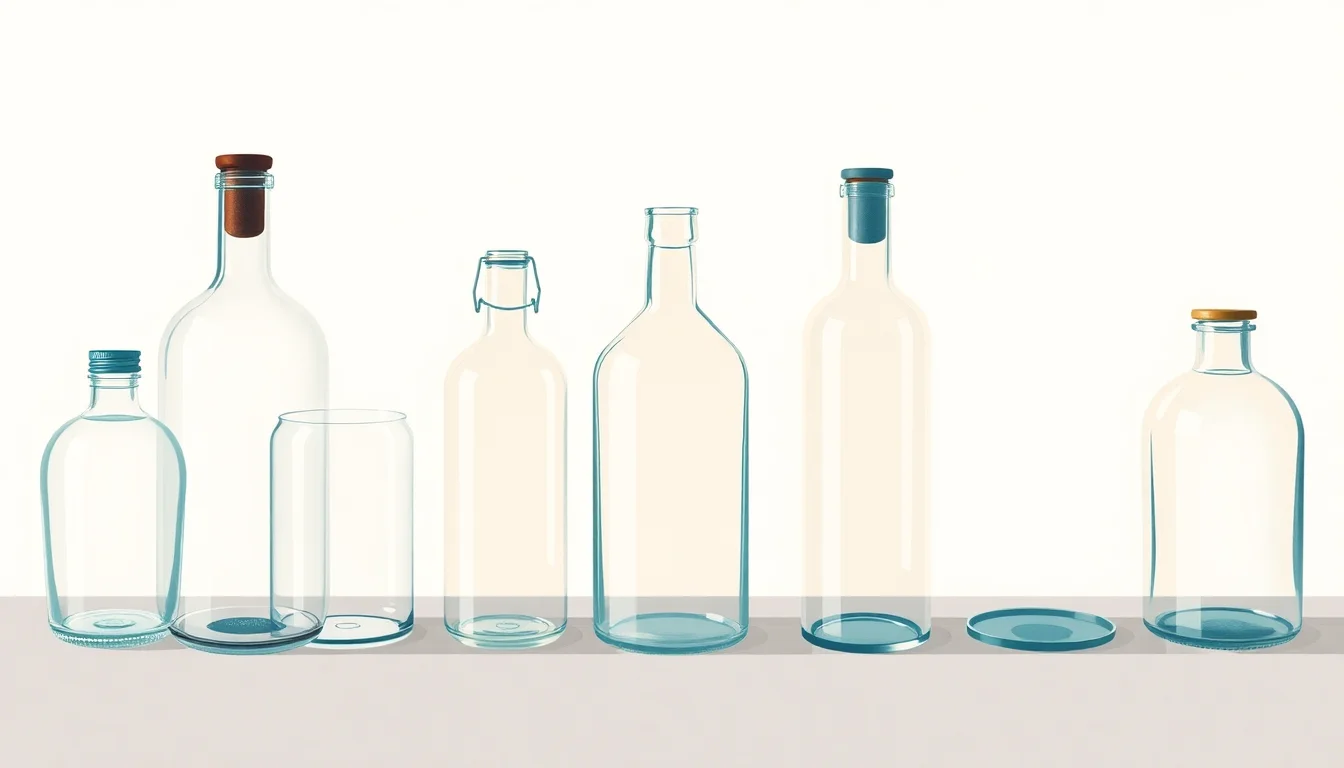
The design and aesthetics of glass containers play a significant role in their appeal and functionality. Glass containers come in a wide range of shapes, sizes, and colors, making them versatile and adaptable to various uses. The design of glass containers is influenced by factors such as Industrial Design, Product Design, and User Experience. The aesthetics of glass containers are also influenced by cultural and historical contexts, such as Art Nouveau and Art Deco. The design of glass containers is critical in Packaging Design and Branding.
📊 Market Trends and Future Outlook
The market trends and future outlook for glass containers are shaped by factors such as sustainability, technology, and consumer demand. The growing awareness of environmental issues and the need for sustainable packaging solutions are driving the demand for glass containers. Additionally, advances in technology are enabling the production of lighter, stronger, and more efficient glass containers. The market trends for glass containers are influenced by the Packaging Industry and the Sustainable Packaging movement. The future outlook for glass containers is promising, with opportunities for growth in emerging markets and industries.
🤝 Cultural Significance and Symbolism
The cultural significance and symbolism of glass containers are complex and multifaceted. Glass containers have been used in various cultural and historical contexts, from ancient rituals to modern art movements. The symbolism of glass containers is influenced by factors such as Material Culture, Symbolic Anthropology, and Cultural Studies. The cultural significance of glass containers is evident in their use in traditional crafts, such as Glassblowing and Stained Glass art. The cultural significance of glass containers is comparable to that of Ceramics and Textiles.
📚 Preservation and Conservation
The preservation and conservation of glass containers are critical concerns in museums, archives, and cultural institutions. Glass containers are fragile and sensitive to environmental changes, requiring specialized care and handling to prevent damage or deterioration. The preservation and conservation of glass containers involve techniques such as Conservation-Restoration, Museum Studies, and Cultural Heritage. The preservation of glass containers is critical in Art Conservation and Historical Preservation.
👩🔬 Scientific Research and Innovations
The scientific research and innovations in glass containers are driven by advances in materials science, technology, and engineering. Researchers are developing new types of glass with improved properties, such as self-cleaning glass and nanoglass. The scientific research in glass containers is influenced by factors such as Materials Science, Nanotechnology, and Biomaterials. The innovations in glass containers have the potential to transform industries such as Energy and Biotechnology.
Key Facts
- Year
- 1500
- Origin
- Ancient Egypt
- Category
- Materials Science
- Type
- Material
Frequently Asked Questions
What are the benefits of using glass containers?
Glass containers are non-porous, non-toxic, and impermeable to air and water, making them an excellent barrier against external contaminants. They are also highly resistant to thermal shock and can be reused multiple times, reducing waste and the need for single-use plastics. Additionally, glass containers are 100% recyclable, and recycling glass saves energy, reduces waste, and conserves natural resources. The benefits of glass containers are comparable to those of Bioplastics and Recycled Plastics.
What are the different types of glass used in containers?
There are several types of glass used in containers, including soda-lime glass, borosilicate glass, and lead crystal glass. Each type of glass has its own unique properties and applications. Soda-lime glass is the most common type of glass used in containers, while borosilicate glass is known for its thermal shock resistance and is often used in laboratory equipment. Lead crystal glass is used in high-end decorative items and is known for its brilliance and clarity. The types of glass used in containers are influenced by factors such as Glass Chemistry and Materials Science.
How are glass containers manufactured?
The manufacturing process of glass containers involves several stages, from raw material extraction to final product formation. The raw materials used to make glass include silica sand, soda ash, and limestone, which are mixed together and heated to high temperatures to form a molten glass. The molten glass is then formed into the desired shape using various techniques, such as blowing, pressing, or casting. The manufacturing process of glass containers is similar to that of Ceramics and Metals, but requires specialized equipment and techniques. The use of Automation and Robotics in glass manufacturing has improved efficiency and reduced production costs.
What are the cultural significance and symbolism of glass containers?
Glass containers have been used in various cultural and historical contexts, from ancient rituals to modern art movements. The symbolism of glass containers is influenced by factors such as Material Culture, Symbolic Anthropology, and Cultural Studies. The cultural significance of glass containers is evident in their use in traditional crafts, such as Glassblowing and Stained Glass art. The cultural significance of glass containers is comparable to that of Ceramics and Textiles.
What are the preservation and conservation methods for glass containers?
The preservation and conservation of glass containers involve techniques such as Conservation-Restoration, Museum Studies, and Cultural Heritage. Glass containers are fragile and sensitive to environmental changes, requiring specialized care and handling to prevent damage or deterioration. The preservation of glass containers is critical in Art Conservation and Historical Preservation. The use of Climate Control and Lighting Control can help to slow down the deterioration process of glass containers.
What are the scientific research and innovations in glass containers?
The scientific research and innovations in glass containers are driven by advances in materials science, technology, and engineering. Researchers are developing new types of glass with improved properties, such as self-cleaning glass and nanoglass. The scientific research in glass containers is influenced by factors such as Materials Science, Nanotechnology, and Biomaterials. The innovations in glass containers have the potential to transform industries such as Energy and Biotechnology.
What are the market trends and future outlook for glass containers?
The market trends and future outlook for glass containers are shaped by factors such as sustainability, technology, and consumer demand. The growing awareness of environmental issues and the need for sustainable packaging solutions are driving the demand for glass containers. Additionally, advances in technology are enabling the production of lighter, stronger, and more efficient glass containers. The market trends for glass containers are influenced by the Packaging Industry and the Sustainable Packaging movement. The future outlook for glass containers is promising, with opportunities for growth in emerging markets and industries.